





Day 2 - Hanoi to to Mai Chau (100 miles/160 km)
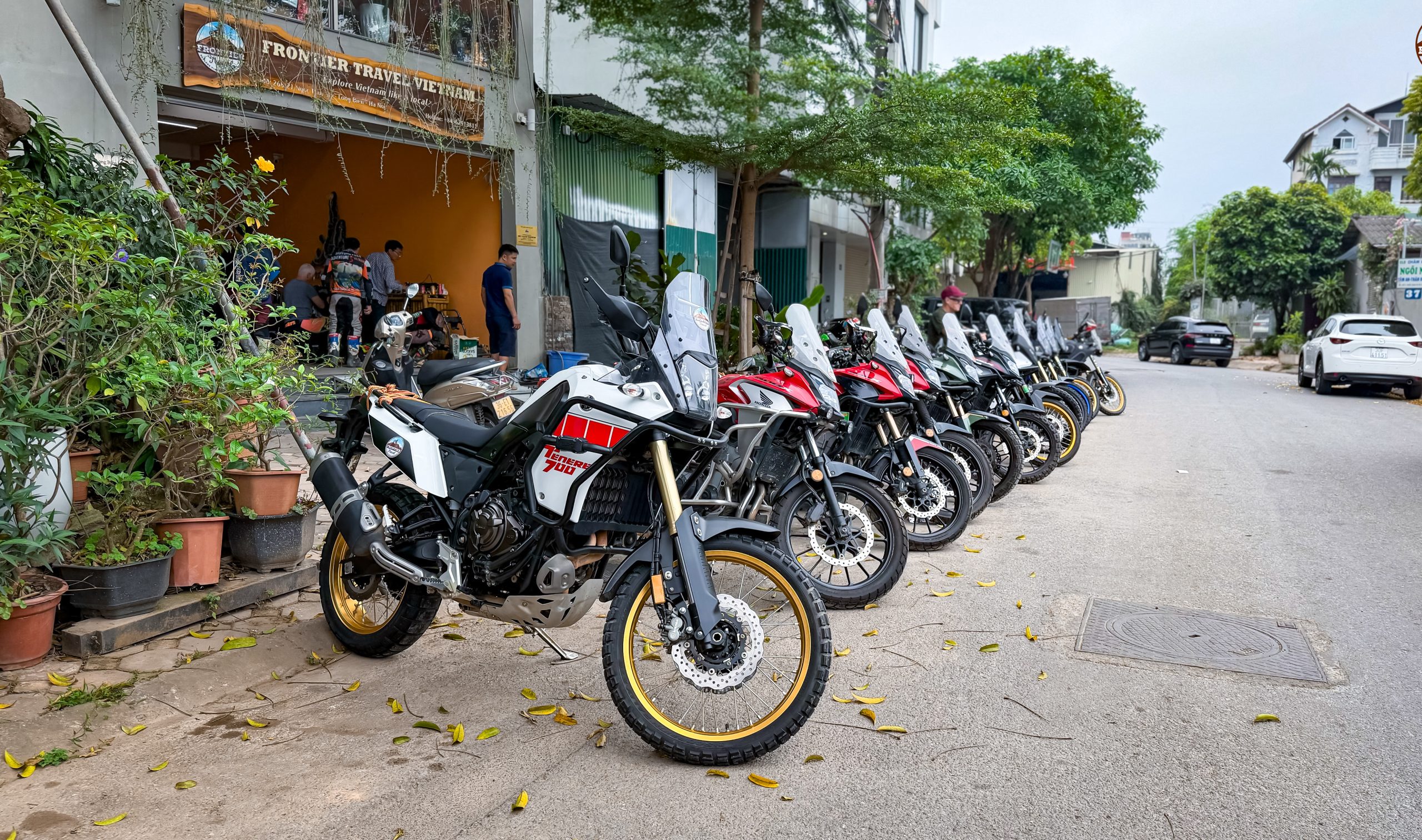
The adventure begins the moment the city falls away. You leave Hanoi behind in the cool of the morning, weaving out through the waking suburbs until the traffic thins, the horizon widens, and the land begins to swell into the first green folds of the northwest. This is the threshold — the point where the trip stops being a plan on paper and becomes a road beneath your wheels. Highway 6 leads you upward, and the riding finds its rhythm: long pulls through farmland, the air turning cooler and cleaner with every kilometre. The day's centrepiece is the dramatic Thung Khe Pass — the"White Stone Pass"— where the limestone splits open like a gateway and the highlands reveal themselves for the first time. You pause at the top, the valley far below, and feel the scale of what lies ahead. Then the descent into the green bowl of the Mai Chau valley: a quilt of paddy fields ringed by mountains and dotted with the stilt houses of the White Thai people. Tonight you settle into refined comfort as the day's ride loosens from your shoulders, the valley turning gold at dusk, woodsmoke rising, and a welcome dinner waiting among the rice fields. Stay in Mai Chau.
Day 3 - Mai Chau Free Day (up to 160 miles/257 km)
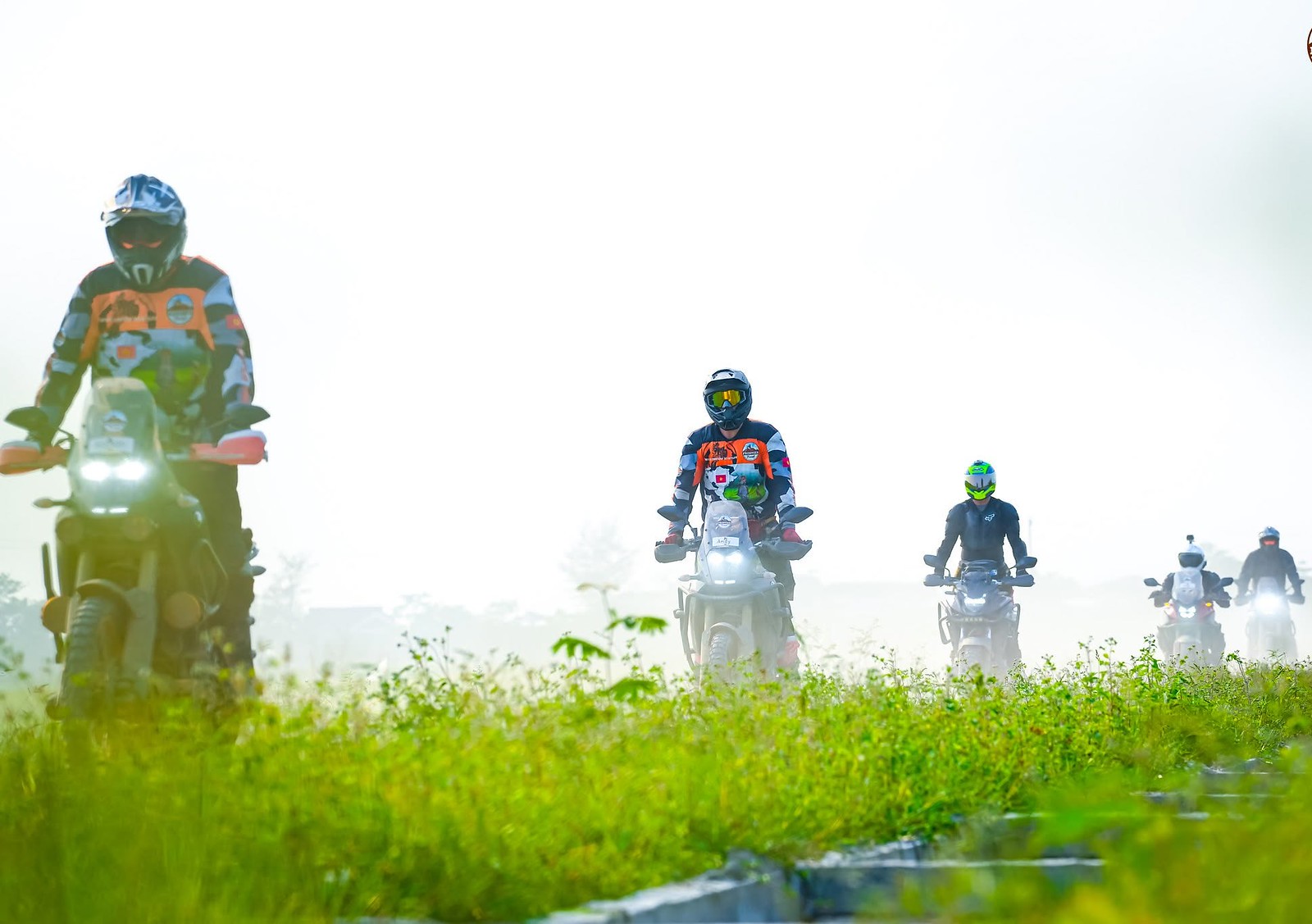
A slower day, by design — the first chance to breathe and let the highlands sink in. With no luggage to carry and nowhere you have to be, you explore the valley on quiet back lanes that thread between the paddies, past grazing water buffalo, bamboo groves, and villages where the loom still clatters in the shade beneath the houses. Ride as much or as little as you like. There are footpaths for those who want to stretch their legs, hidden caves tucked into the hillsides, and viewpoints that reward a short climb with the whole valley spread out below. Or simply sit with a coffee and watch valley life move at its own unhurried pace — children cycling to school, farmers bent in the fields, the light shifting across the mountains. It is a day that recalibrates you to the pace of the journey, so that tomorrow, when the mountains rise in earnest, you ride into them rested and ready. Stay in Mai Chau.
Day 4 - Mai Chau - Nghia Lo (102 miles/263 km)
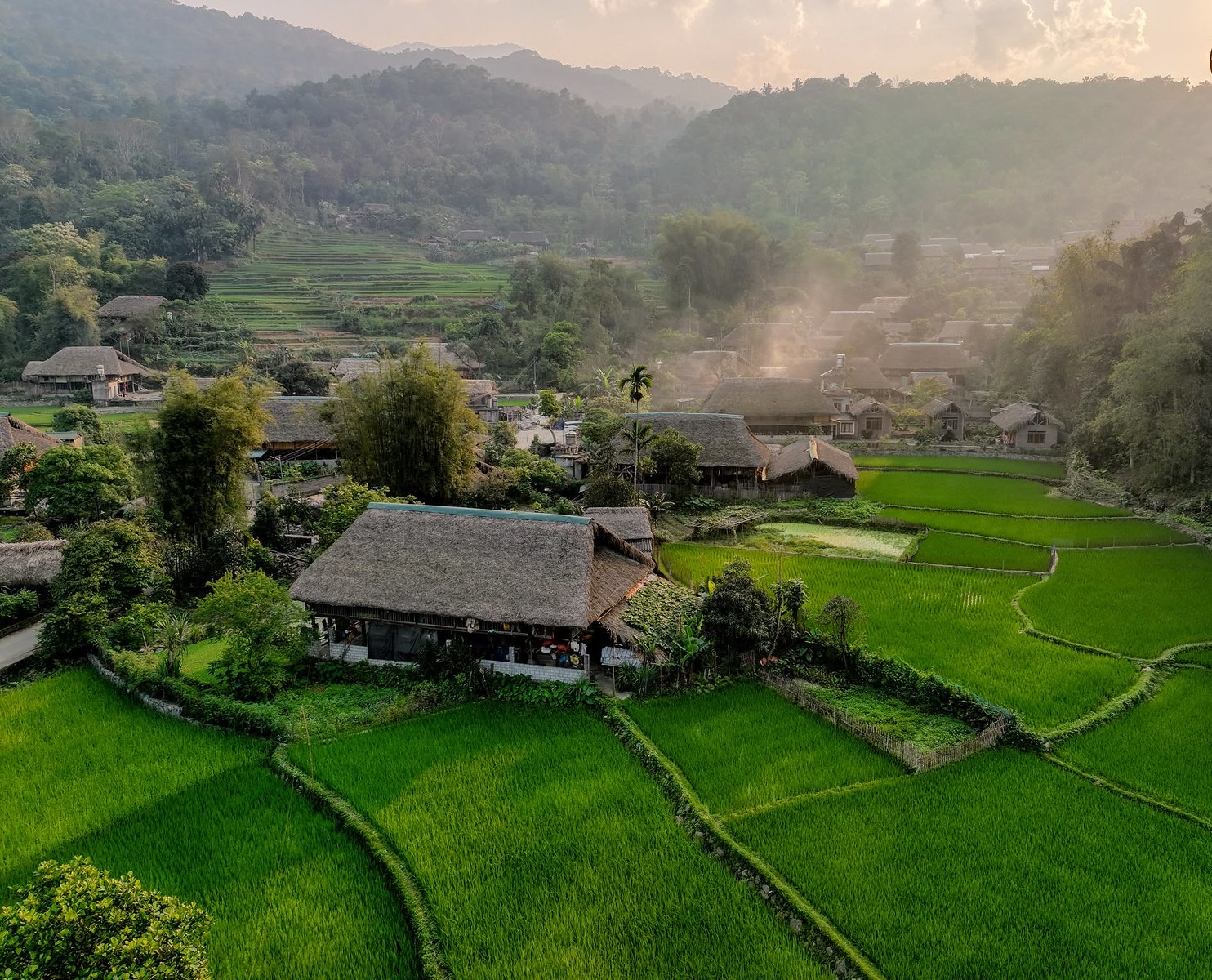
Today the mountains rise in earnest, and the riding comes into its own. The road climbs and dives through a succession of passes, each crest delivering a fresh sweep of terraced hillside falling away to the valleys below. This is riding country in its purest form — long, flowing corners, cool mountain air, and, for long stretches, almost no one else on the road but you. You'll feel the landscape grow wilder and more remote as the day unfolds. Tea plantations stripe the slopes in neat green rows; bamboo forests crowd the roadside; and small market towns offer the perfect excuse to stop, stretch, and watch the rhythm of highland life. Every bend opens onto something worth slowing down for. By late afternoon you roll into Nghia Lo, a warm and welcoming valley town at the heart of Black Thai culture, famed for the Muong Lo basin — one of the great rice baskets of the northwest. It is a gentle landing after a rewarding day in the saddle, with local flavours and highland hospitality to round off the evening. Stay in Nghia Lo.
Day 5 - Nghia Lo to Sapa (142 miles/230 km)
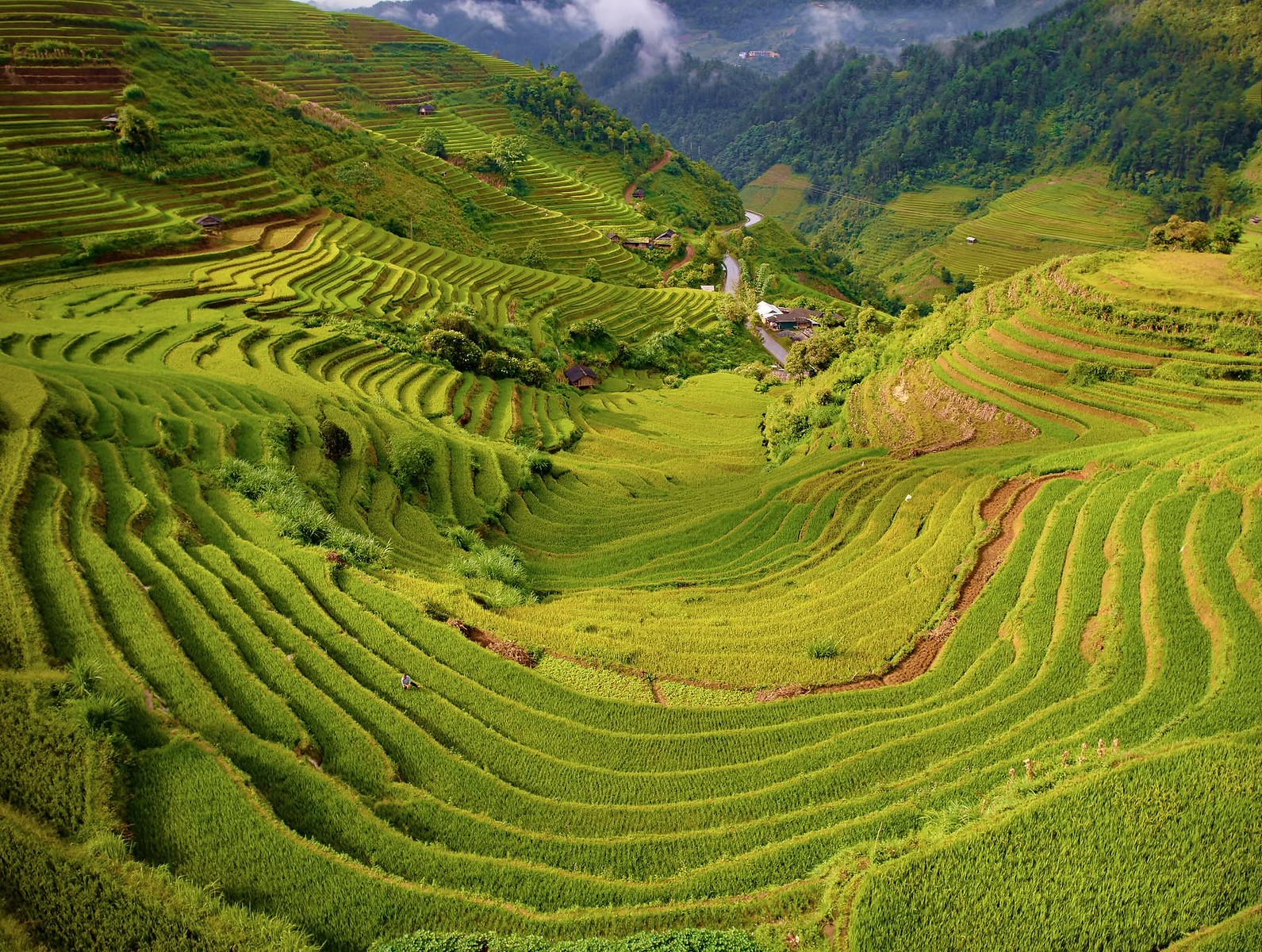
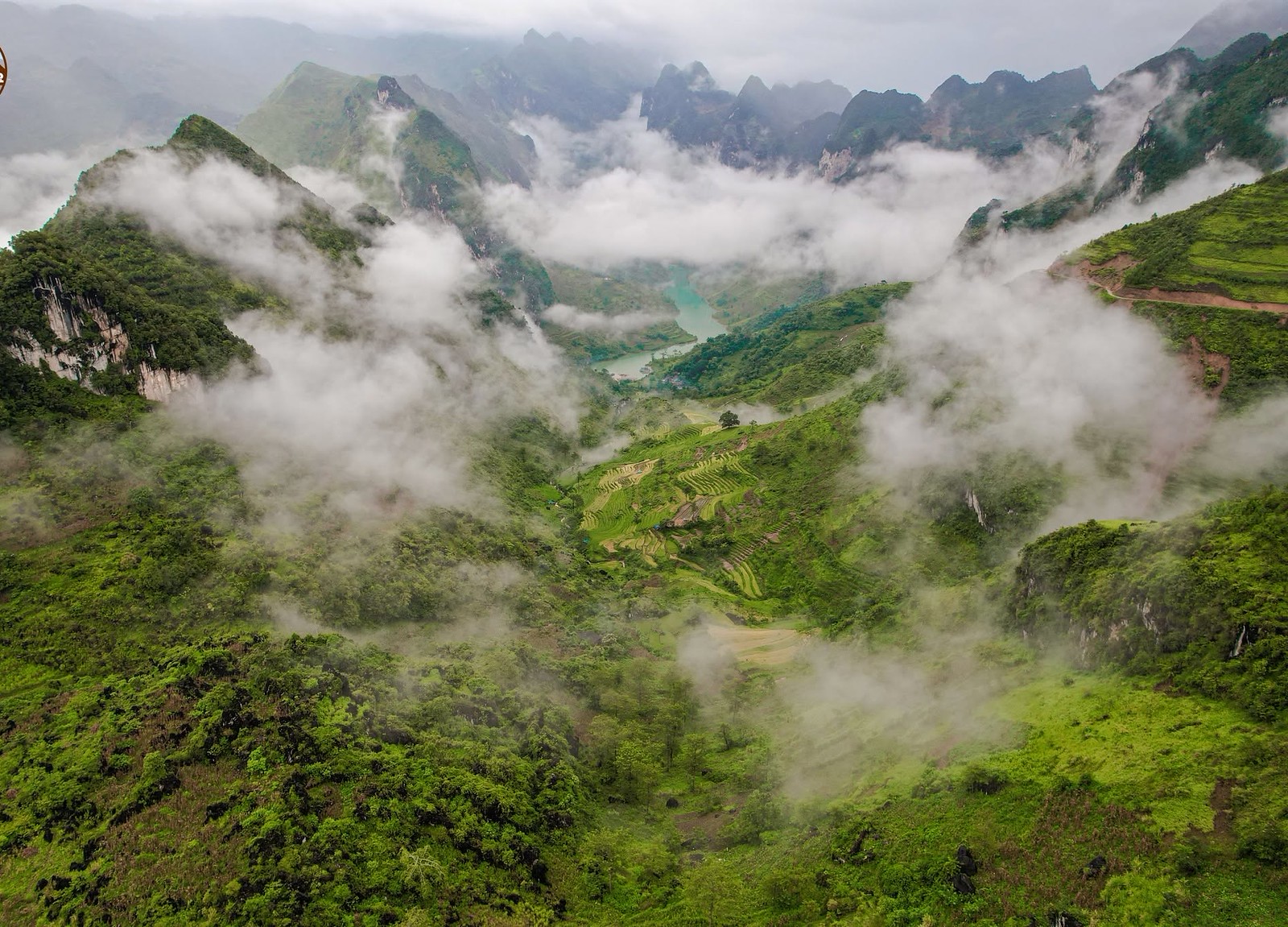
The signature ride of the entire journey — and for many, the day they remember above all others. You climb toward the mighty Khau Pha Pass, one of Vietnam's legendary"four great passes,"a serpentine masterpiece of tarmac that coils through cloud and mountain with views that stop you in your tracks. Every switchback earns its reward. Beyond the pass lies Mu Cang Chai, where the most photographed rice terraces in the country cascade down the mountainsides in vast green-and-gold amphitheatres, sculpted by hand over centuries. You'll want to stop again and again — this is one of the great landscapes of Southeast Asia, and no photograph quite does it justice. It is a long, exhilarating day, and you earn every kilometer. You press on through high, open country as the afternoon stretches out, before the final climb to Sapa — the storied hill station perched beneath Fansipan, the highest peak in all Indochina. Tonight, a hot bath and refined comfort are well and truly earned, with the satisfaction that only a big day on a great road can bring. Stay in Sapa.
Day 6 -Sapa Free Day Up to (125 miles/200 km)
You are on the rooftop of IndoChina. You have a full day to absorb the high country, and to rest legs that have carried you a long way. Sapa sits in a world of its own — mist drifting through pine and bamboo, terraced valleys falling away in every direction, and the markets of the Hmong and Red Dao peoples bringing vivid colour to the cool mountain streets. Spend the day however the mood takes you. Ride out to the Muong Hoa Valley, where some of the finest terraces in the region step down toward the river. Walk among the paddies on quiet trails. Browse the markets, where indigo-dyed textiles and silver jewellery change hands. For those drawn to the heights, take the cable car toward the summit of Fansipan. As the cabins rise above the valleys, the patchwork of rice terraces, forests, and mountain ridges unfolds beneath you, revealing the vast scale of Vietnam’s northwest. From the top, panoramic views stretch across a sea of peaks often drifting in and out of the clouds. Or simply slow the pace entirely. Find a quiet café overlooking the mountains, enjoy a traditional herbal bath inspired by Red Dao culture, or spend an afternoon on a terrace watching the mist roll across the valley. Sapa rewards those who explore, but it rewards those who pause just as much. However you spend it, the day leaves you with a deeper sense of where you've ridden to — and the scale of the mountains you've conquered to get here. Stay in Sapa.
Day 7 - Sapa to Vu Linh (100 miles/160 km)
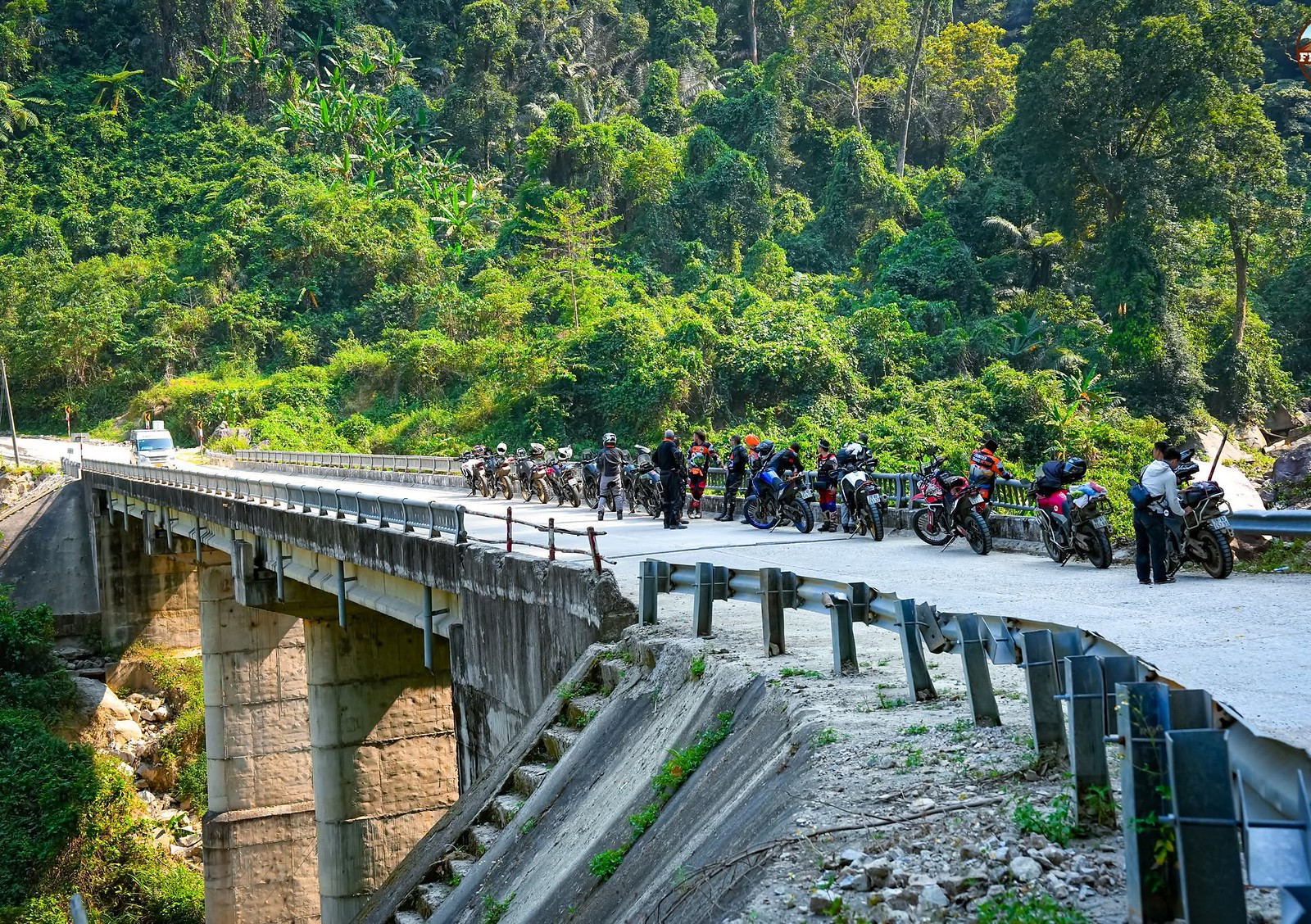
You leave the high country behind and ride east toward Bac Ha, dropping through quieter, lesser-travelled hills where the tour buses rarely venture. The riding is relaxed and rewarding, the landscape softening as you go, the roads winding through villages that feel a world apart. Bac Ha is famous for its kaleidoscopic Sunday market — one of the most colourful gatherings in all of Vietnam — where the Flower Hmong come together in brilliant, intricately embroidered dress, and the whole town becomes a swirl of colour, trade and conversation. (Time your ride right and it's unforgettable; even on other days, the town has a charm all its own.) By afternoon you reach Vu Linh, on the tranquil shores of Thac Ba Lake — a vast expanse of still water scattered with more than a thousand green islands. After days of mountains and switchbacks, the calm of the lake is a welcome change of rhythm: a place to slow down, breathe, and watch the sun sink behind the water. Stay in Vu Linh.
Day 8 - Vu Linh to Ninh Binh (142 miles/230 km)
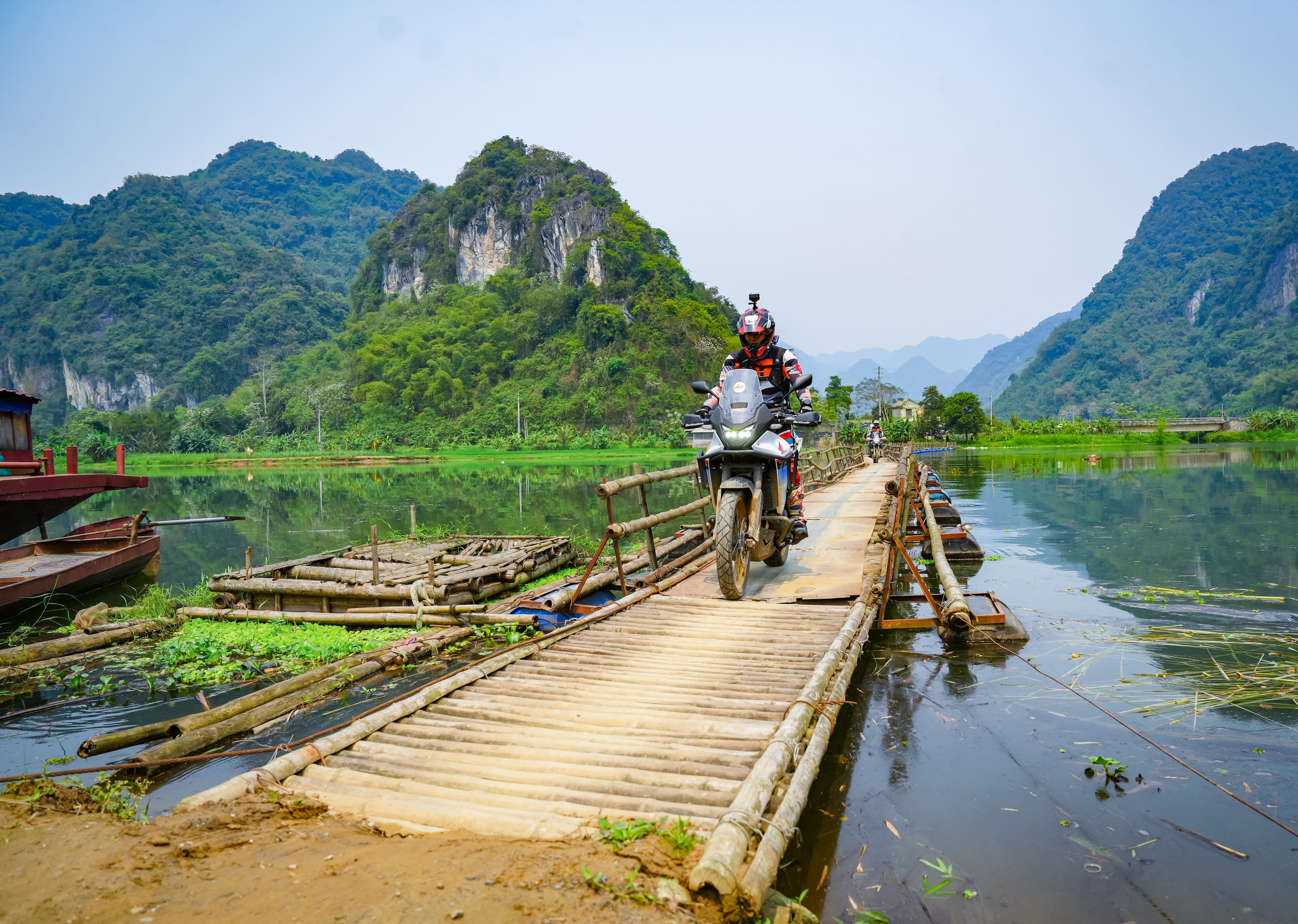
A transitional day, and a beautiful one — the ride that carries you out of the highlands and down toward the lowland karst. The great mountains gradually release their grip; the terrain softens into rolling country, then opens again as the dramatic limestone towers of Ninh Binh begin to rise from the plains ahead. It's a day of contrasts and quiet pleasures: river valleys, farmland, and the slow, satisfying transition from one kind of landscape to another. You feel the journey shifting beneath you — from the raw, high drama of the mountains to something softer, more cinematic, almost dreamlike. Often called "Halong Bay on land," Ninh Binh is a landscape of rivers winding between sheer karst peaks, hidden grottoes, and ancient temples half-swallowed by green. You arrive with the whole evening — and a full day to follow — to take it in at leisure. Stay in Ninh Binh.
Day 9 - Ninh Binh Free Day up to (126 miles/204 km)
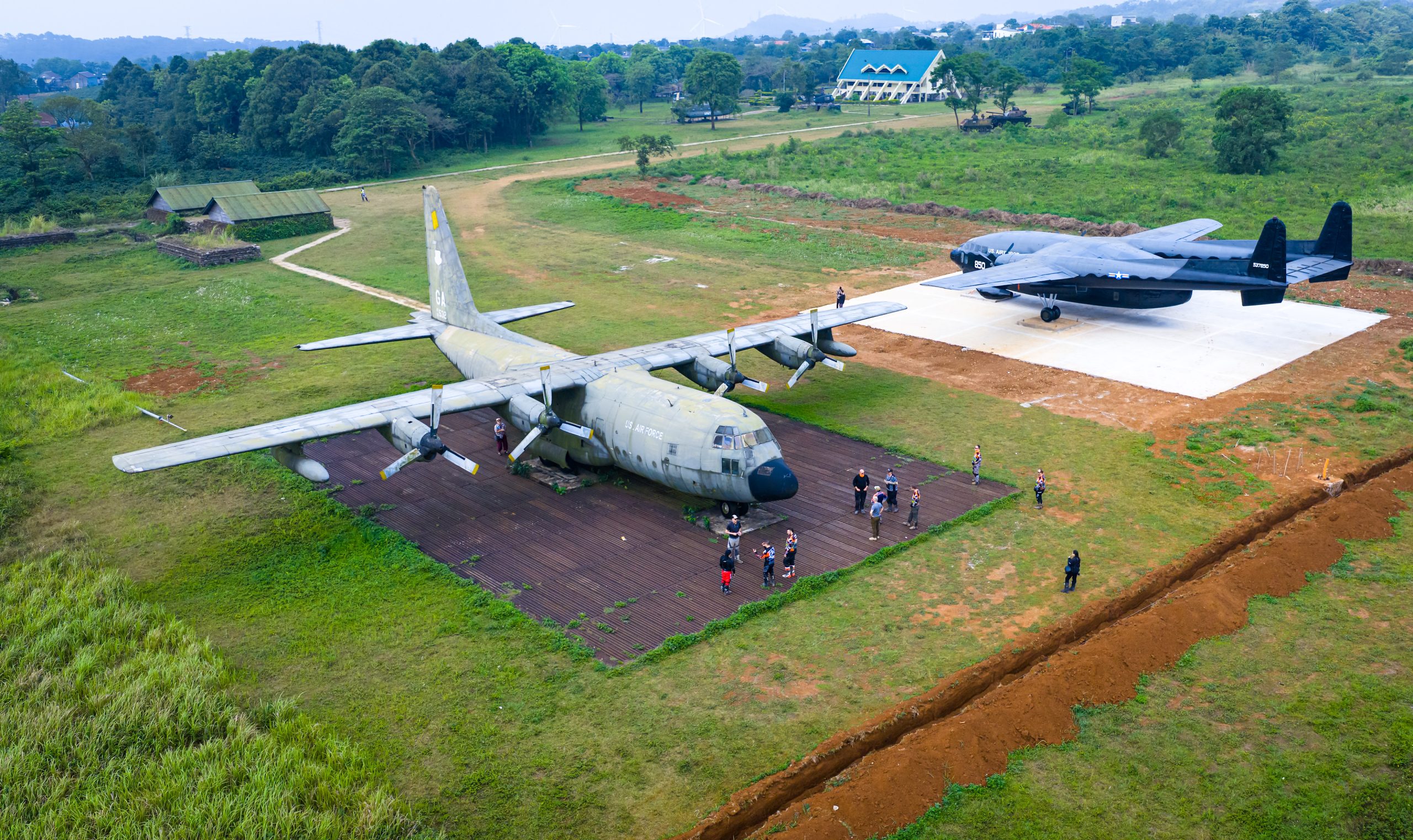
No long ride today — just one of the most beautiful landscapes in all of Vietnam to explore at your own pace. The day's great pleasure is the water: you drift by sampan along the Trang An or Tam Coc waterways, where the river threads between towering karst cliffs and slips into half-lit caves, the rowers working the oars with their feet in a tradition generations old. Above the water, more wonders wait. Climb the steps to the Mua Cave viewpoint for a dragon's-eye panorama over the whole valley — the river curling silver between the peaks, the paddies glowing green below. Or step back in time at Hoa Lu, the ancient capital of Vietnam, where temples honour the kings who once ruled the land from this very spot. It is a day of quiet wonder and gentle exploration — a deep breath of beauty before the long road south that comes tomorrow. Stay in Ninh Binh.
Day 10 - Ninh Binh to Phong Nha (285 miles/480 km)
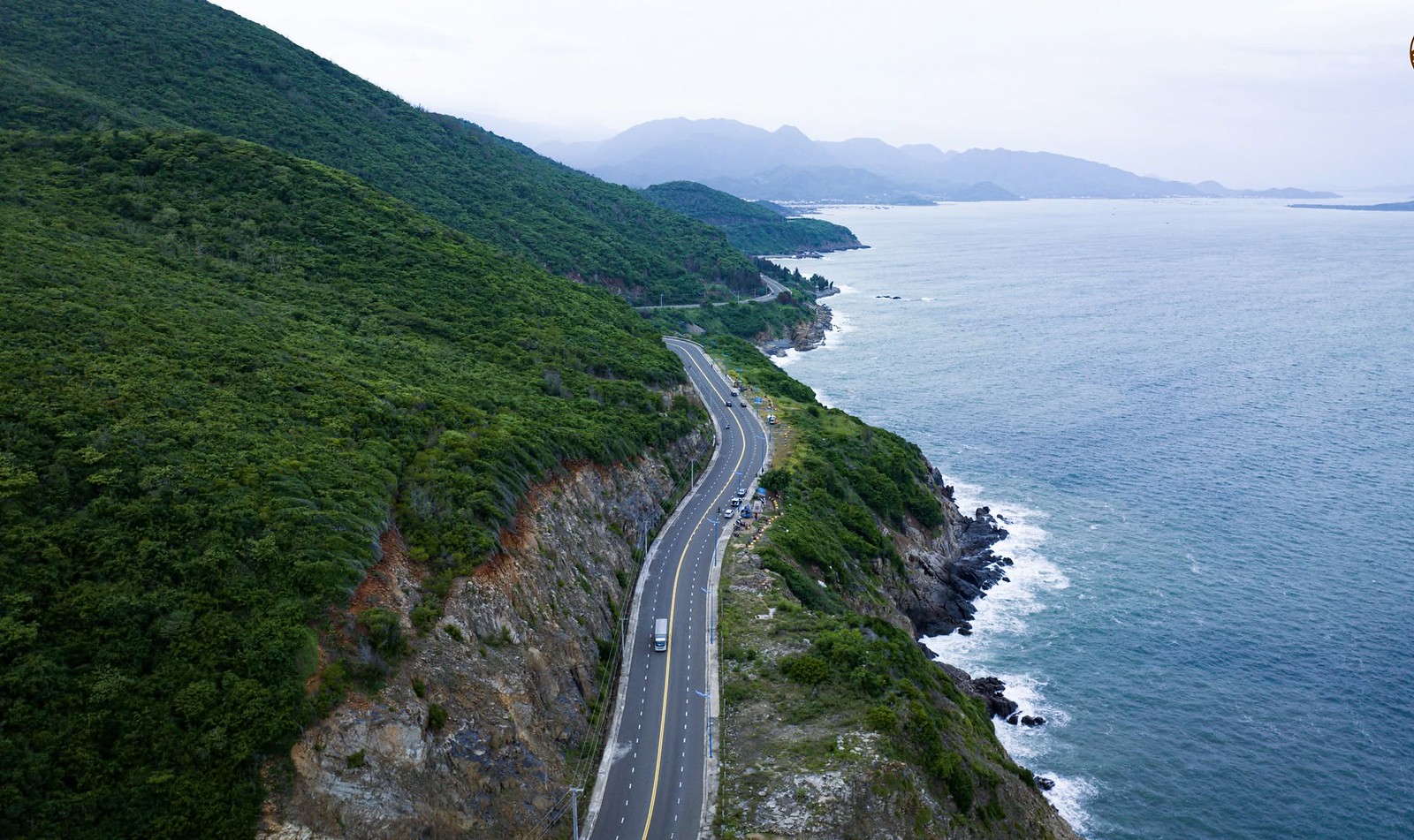
The big push, and the longest, most demanding ride of the trip. It carries you the full length of north-central Vietnam, from the karst of Ninh Binh down into the wild frontier province of Quang Binh, the road running long and open, the hours measured in horizon after horizon. This is a day for seasoned riders who relish distance and the satisfaction of a hard ride well ridden. You settle into the rhythm of the road, watch the country change around you, and cover real ground under your own power. The reward waits at the end. Phong Nha is the gateway to one of the most extraordinary cave systems on Earth, a UNESCO World Heritage wilderness of jungle and limestone. Tonight you rest at the very edge of it, road-weary and elated, on the threshold of the underworld you explore tomorrow. Stay in Phong Nha.
Day 11 - Phong Nha Free Day - (up to 150 miles/241 km)
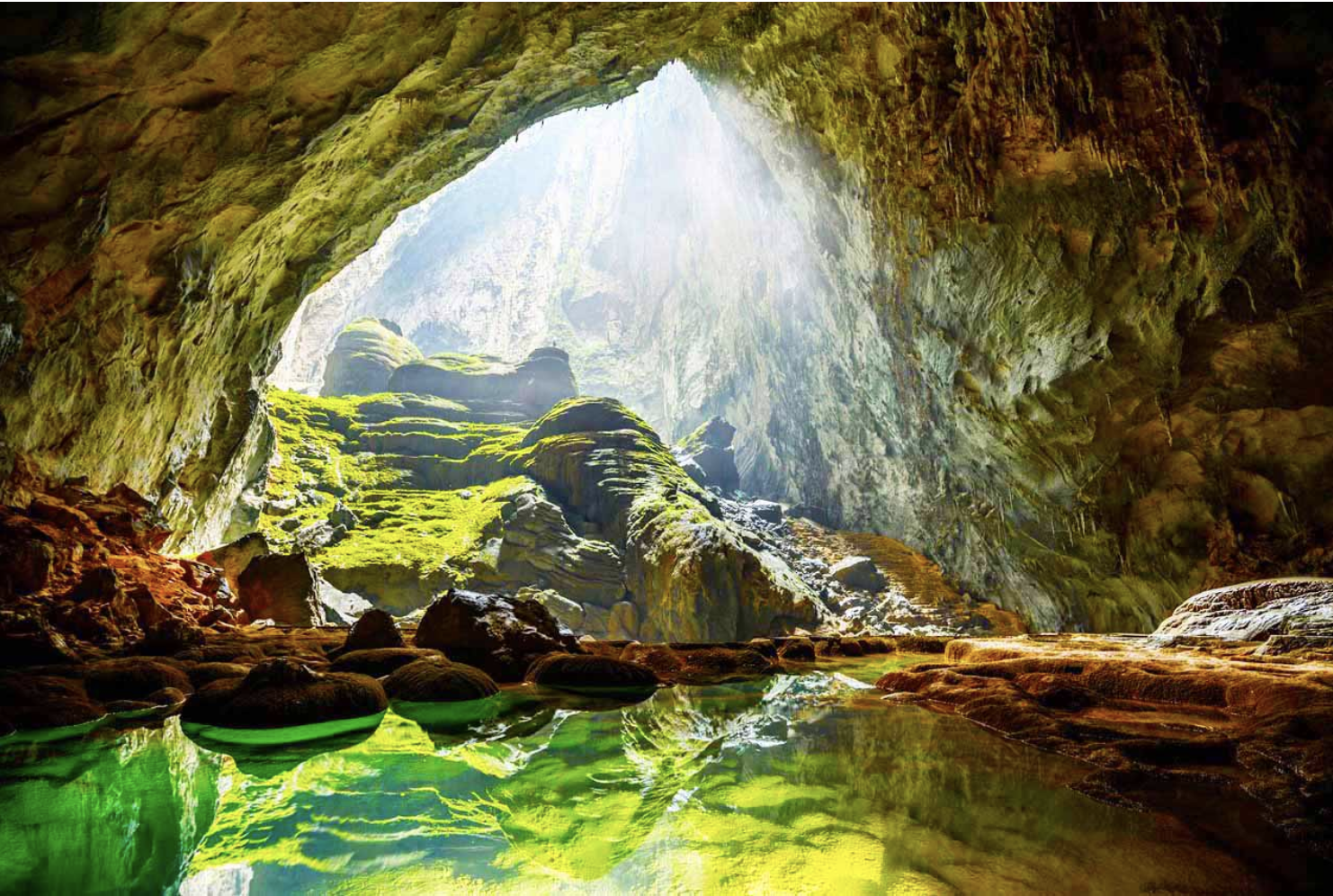
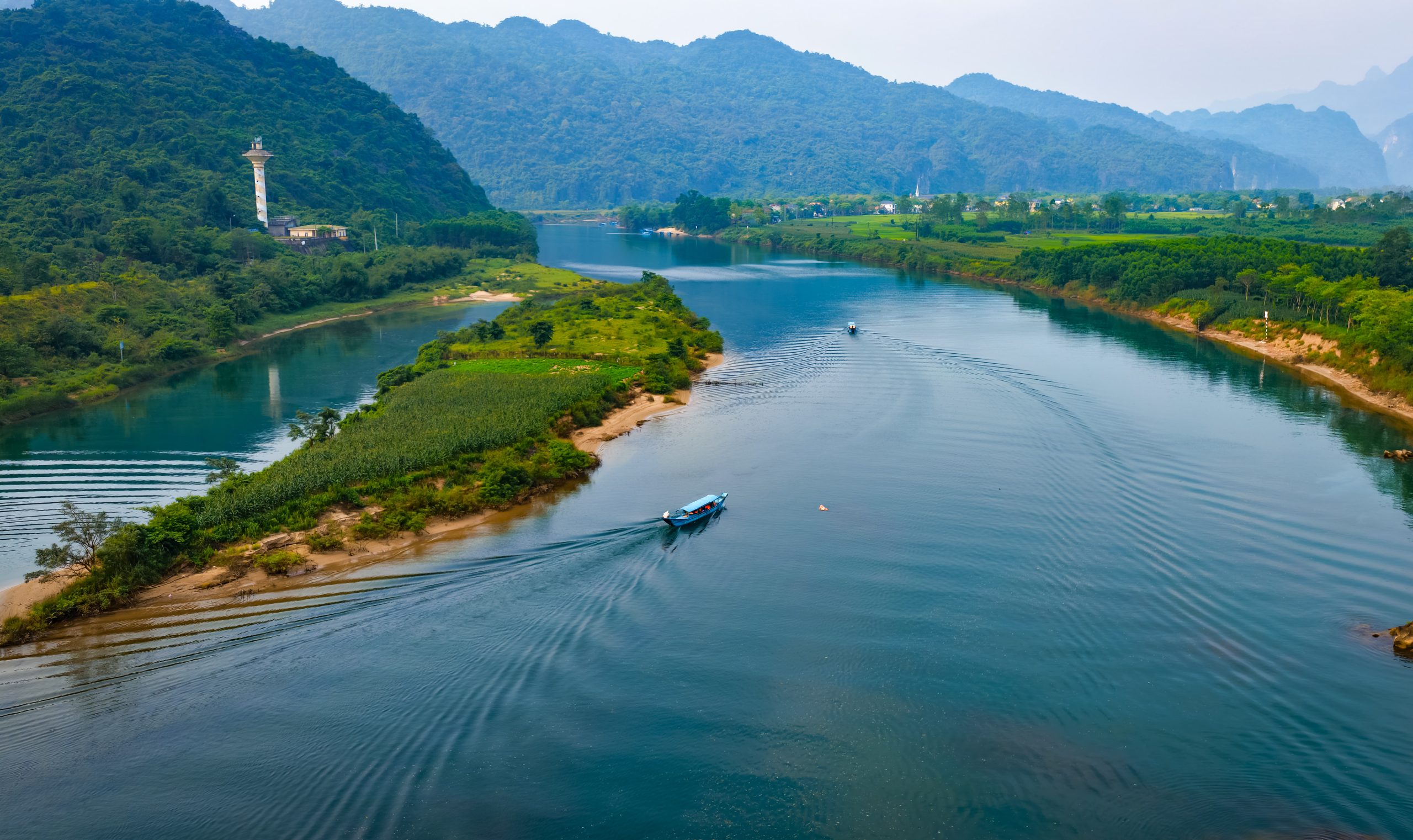
Today you step into another world entirely. Phong Nha–Ke Bang is home to some of the largest caves on the planet — vast cathedral chambers of stone, underground rivers running through the dark, and formations hundreds of thousands of years in the making. To stand inside them is to feel genuinely small in the best possible way. Explore by boat and on foot, gliding into Phong Nha Cave along an underground river, or marvelling at the colossal chambers of Paradise Cave, where the limestone hangs in impossible curtains and columns overhead. It is humbling, otherworldly, and utterly unforgettable. Above ground, the riding is some of the most peaceful and beautiful of the whole trip. The quiet park roads wind through dense jungle and sheer karst, the limestone rising on every side, the air thick and green. After yesterday's marathon, it's a day to savour — wonder below the earth, and gentle, gorgeous riding above it.
Day 12 - Phong Nha to Hue (130 miles/210 km)
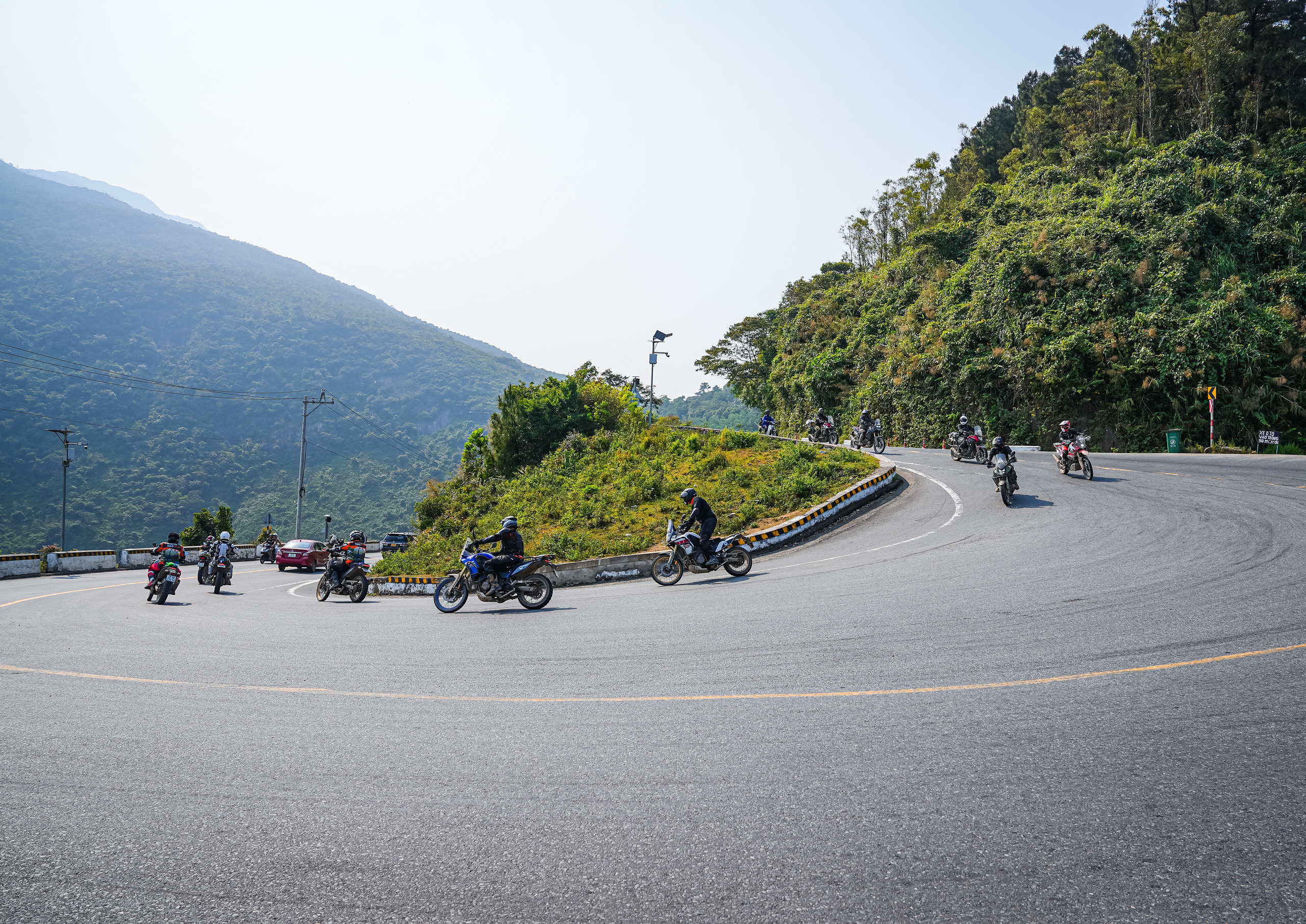
Head south today and enjoy some fun roads. You will arrive in Hue, the ancient Imperial Capital of Vietnam and a UNESCO World Heritage site. As Vietnam’s former imperial capital, it offers an authentic, less commercialized vibe compared to neighboring hotspots. We will get in early enough for you to explore this historic corner of Vietnam. Stay in Hue.
Day 13 - Hue to Hoi An (200 miles/321 km)
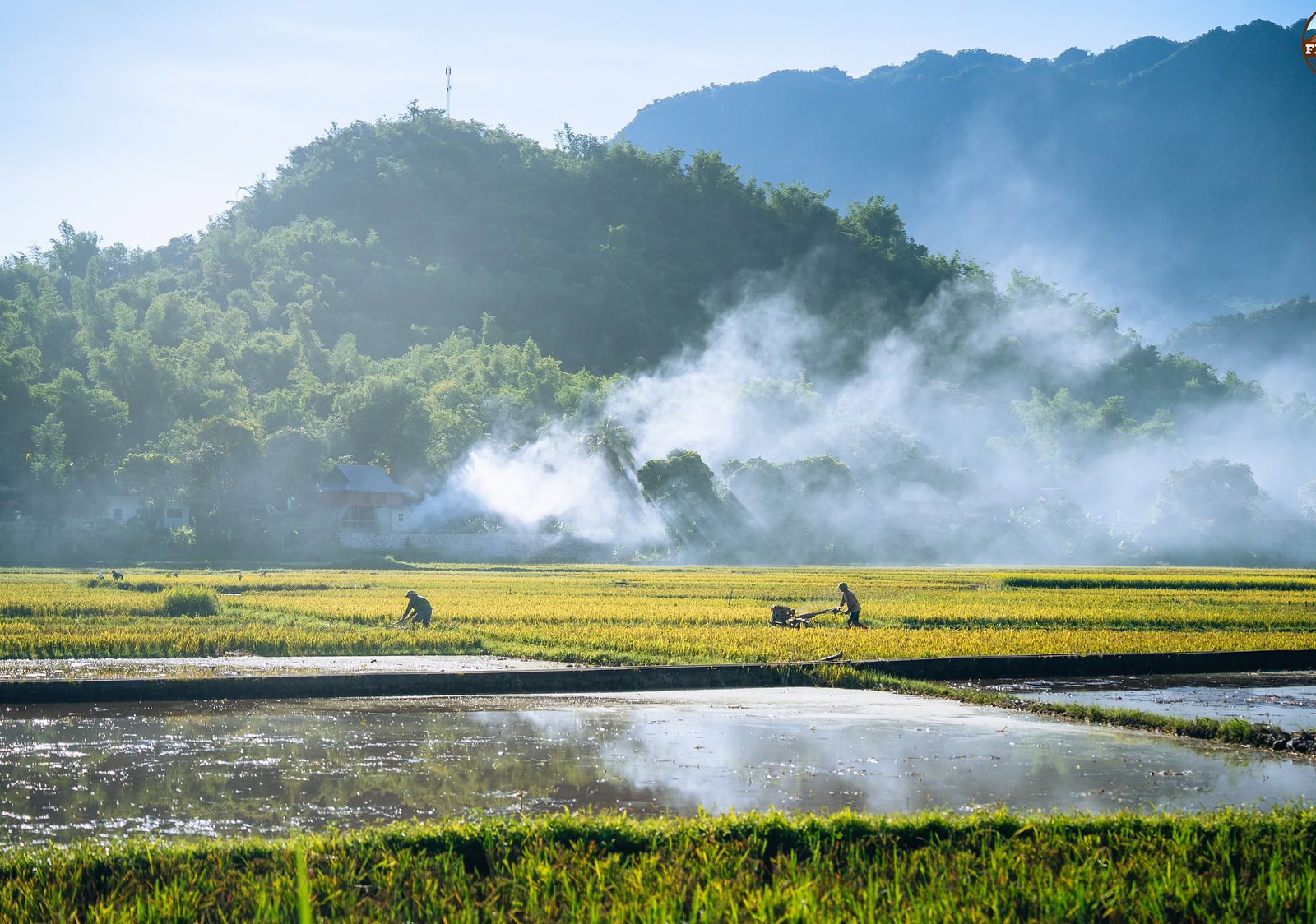
Travel from one UNESCO World Heritage site to another..strung together by world-class worlds. We will be going over Hai Van pass today. This may not mean a lot to you now, but once you ride this road...it will put a smile on your face from then. Hoi An is a historic fishing port now stuck in time. Stay in Hoi An.
Day 14 - Departure Day
Back to real life, or keep living the dream?